Japan's Largest Sawtooth Oak Forest and its Multipurpose Role

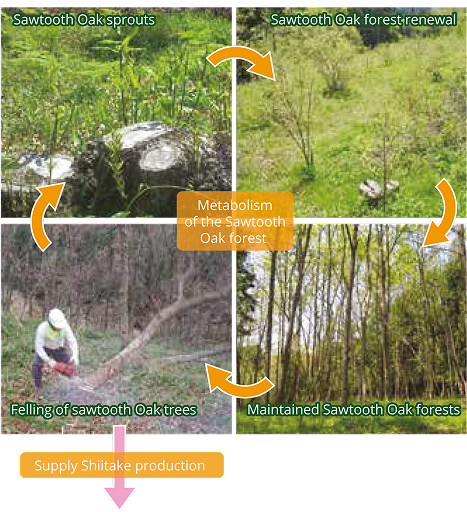
The total stock volume of Sawtooth Oak in Oita ranks the largest in Japan, with about 24%
of the national stock. In addition, the percentage of Sawtooth Oak forests in this GIAHS
region is 11.2%. The main reason is that Sawtooth Oaks were planted widely due to their
usefulness as log wood for Shiitake cultivation and source for charcoal and firewood.
Major Steps of Shiitake Cultivation

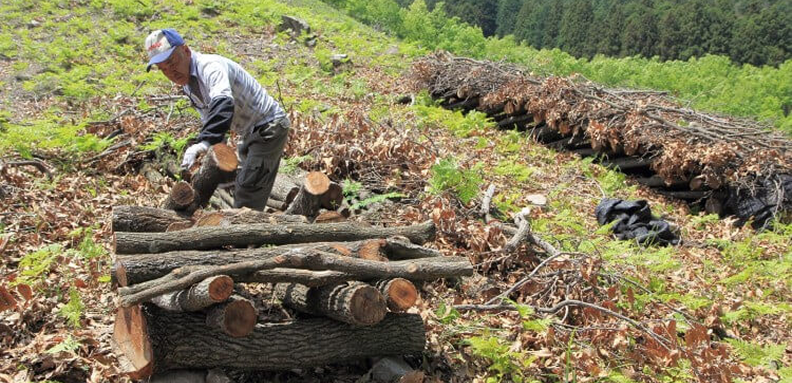
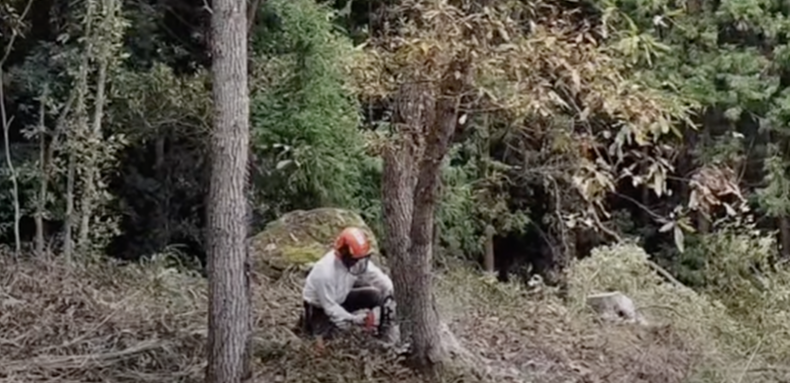
1. Logging 

(Autumn)
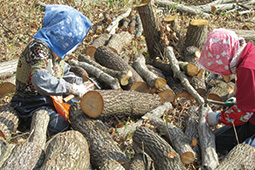
The logged wood is pieced into 1 to 1.2m fragments.

2. Drilling and Komauchi 

[January to March]
Drill holes in the cut logs with an electric drill and inoculated with the ‘Tanegoma’ (seed of shiitake). This practice is called ‘Komauchi’.

3. Resting period 

[January to March]
In order to ensure good ventilation and prevent direct sunlight, the inoculated wood logs are shaded with oak branches and leaves where shiitake mycelium can grow easily. This process is called “Fusekomi”.

4. Moving to Hoda-ba

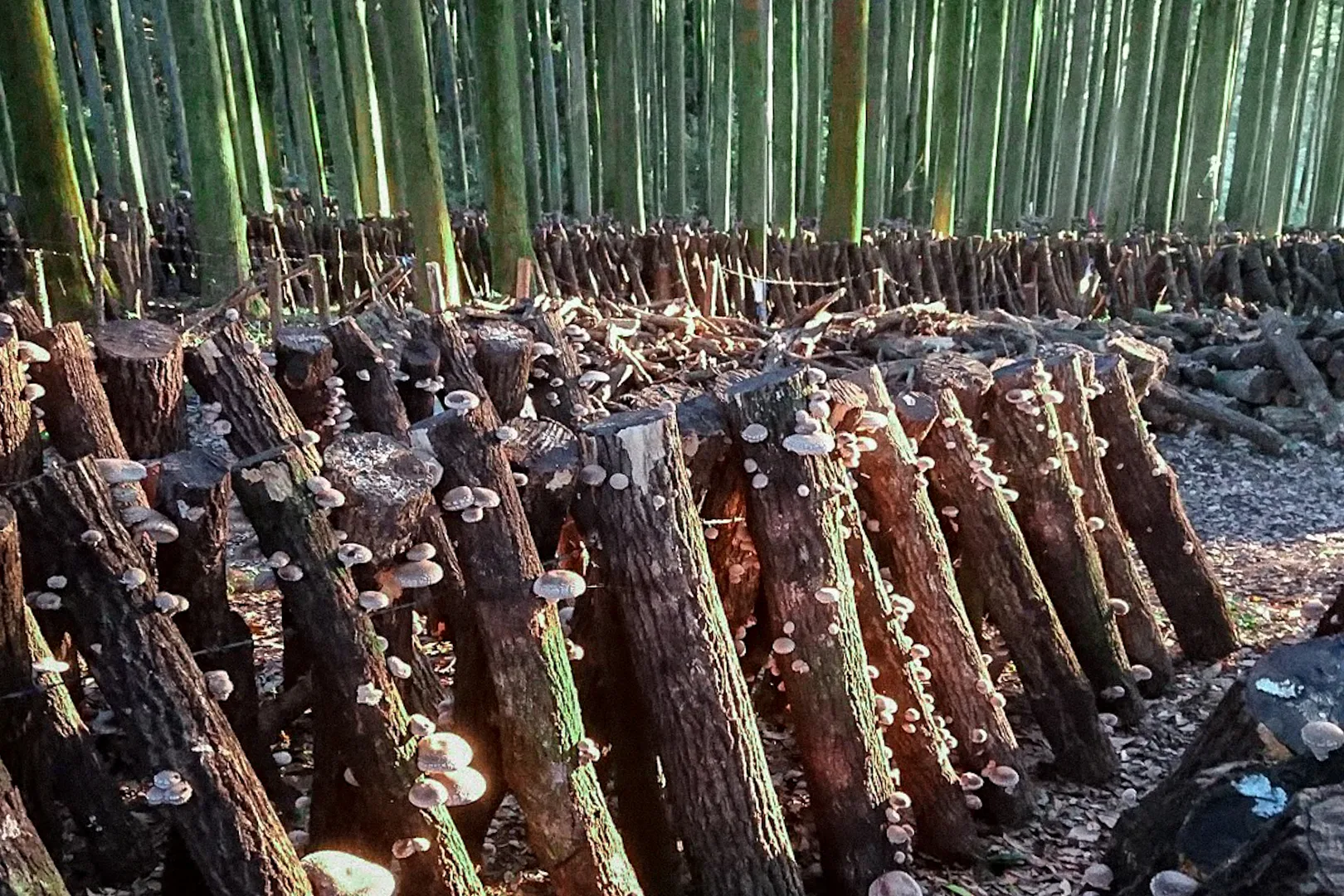
In the autumn of the second year after incubation, the logs are moved to Hoda-ba – a place suitable for shiitake mushroom growth.

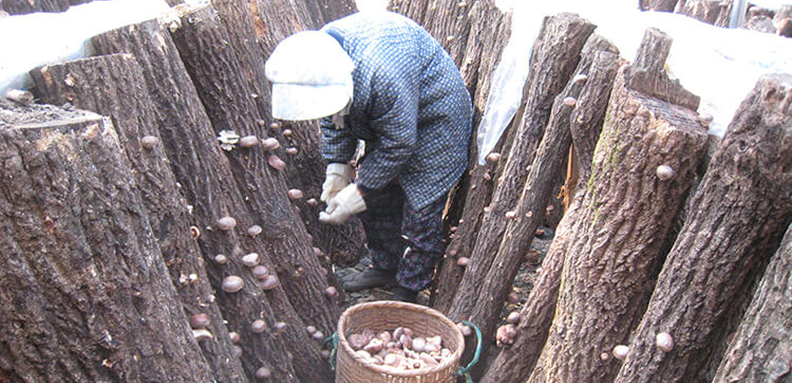
5. Growth and Harvesting

The Shiitake mushrooms can be harvested twice a year: in spring and in autumn.

Major Steps of Shiitake Cultivation

Logging

(Autumn)
The logged wood is pieced into 1 to 1.2m fragments.

Drilling and Komauchi

[January to March]
Drill holes in the cut logs with an electric drill and inoculated with the ‘Tanegoma’ (seed of shiitake). This practice is called ‘Komauchi’.

Resting period

[January to March]
In order to ensure good ventilation and prevent direct sunlight, the inoculated wood logs are shaded with oak branches and leaves where shiitake mycelium can grow easily. This process is called “Fusekomi”.

Moving to Hoda-ba

In the autumn of the second year after incubation, the logs are moved to Hoda-ba – a place suitable for shiitake mushroom growth.

Growth and Harvesting

The Shiitake mushrooms can be harvested twice a year: in spring and in autumn.
Scroll to Top